
normic journal
Before normic, there was a giant puzzle and a very bad hallway idea
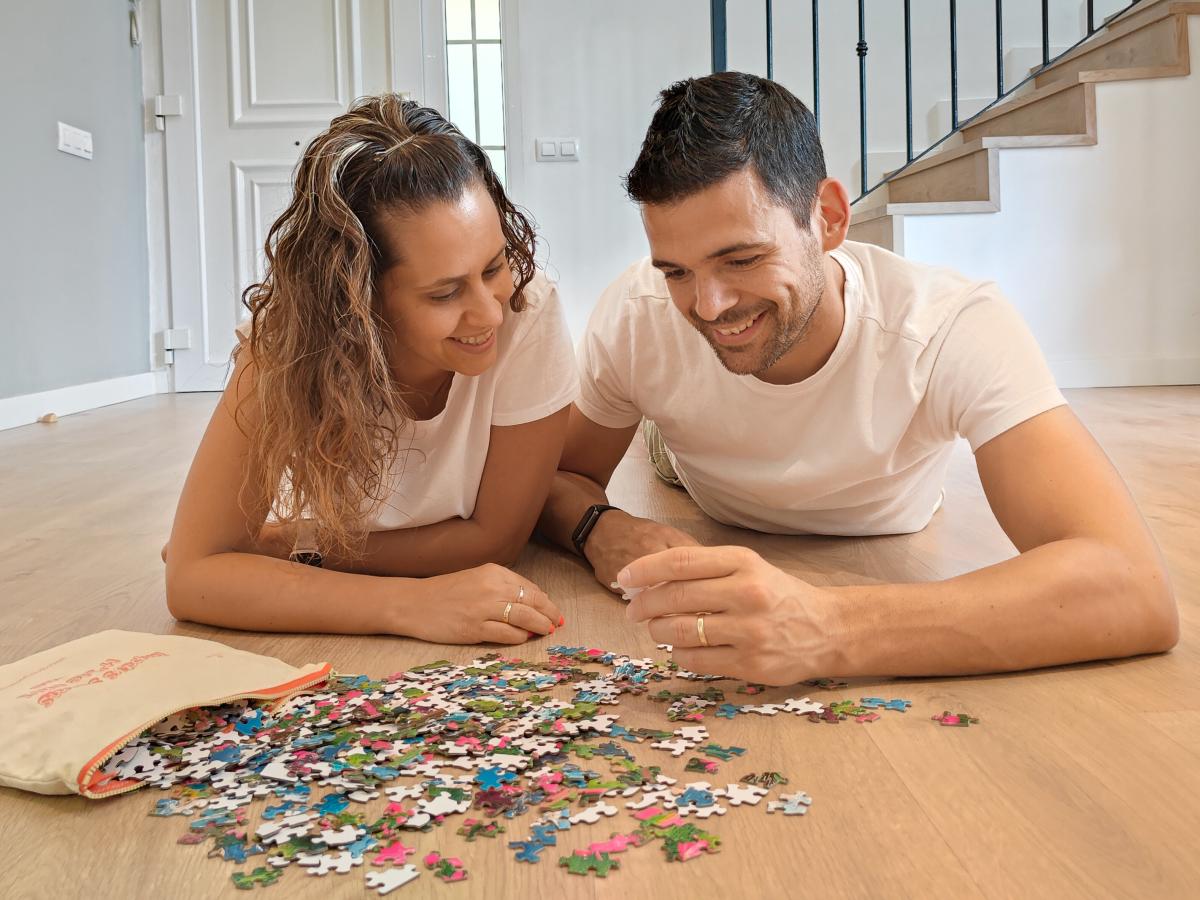
normic was born out of a bet, but maybe I should start slightly earlier than that.
My husband has always loved puzzles. Really loved them.
When we bought our first house, he was working on Vida by Educa, which is a huge puzzle, more than four metres long. At one point, he told me that once he finished it, he wanted to hang it on the hallway wall.
I thought that was a terrible idea.
For once, common sense won, and the puzzle never made it to the wall.
But that gives you a fairly accurate picture of the situation: Rubén has always been the puzzle person in this house.
I am more the challenge person.
The idea came while I was watching them
One day, we were at home and Rubén was doing a puzzle with our children.
I was watching them for a while, and then I had an idea.
I bought him a puzzle without telling him anything, and when it arrived, I took it out of the box and gave it to him with no visual reference at all. Just the pieces inside the bag.
Then I said, “I bet you can’t complete this if you don’t have the picture.”
He accepted the challenge straight away, which was not surprising.
He took longer, but that was the whole point
Of course, it took him longer than usual.
Without the image, he could not check what came next, what section he was building, or what the final picture was supposed to look like.
He had to rely on the pieces, on observation, and on a lot more patience.
And that was exactly what made it interesting.
When he finished, I asked him if he had liked the experience.
He told me he had.
Not because it was easy, obviously. It was not.
He liked it because it felt different. He liked the challenge, but he also liked the mystery of not knowing what he was building until the end.
Take away the image, and the puzzle becomes a different kind of experience.
That is when I started thinking bigger
After that, I kept thinking about what had happened.
It was not just that Rubén had finished the puzzle. It was that removing the image had changed the whole experience.
It made the puzzle feel more challenging, of course, but also more intriguing. There was something different about not knowing what you were building until the end.
That was the part I could not let go of.
I started thinking that maybe puzzles without a reference image could be more than a one-off challenge at home. Maybe they could become their own concept.
That was the idea that led me to create normic.
I wanted to build a brand around that feeling: the challenge, the curiosity, and the satisfaction of figuring something out without being shown the answer first.
That idea later became our No Image Puzzle concept, and it is still at the heart of normic today.
Looking back, I like that it all started in such a normal way. At home, with my family, a puzzle on the table, and one idea that felt too interesting to ignore.